
- On December 13, 2025
- In Roman Forum Skip the line tickets
Temple of Vesta Inside Look, Location, History & How to Visit
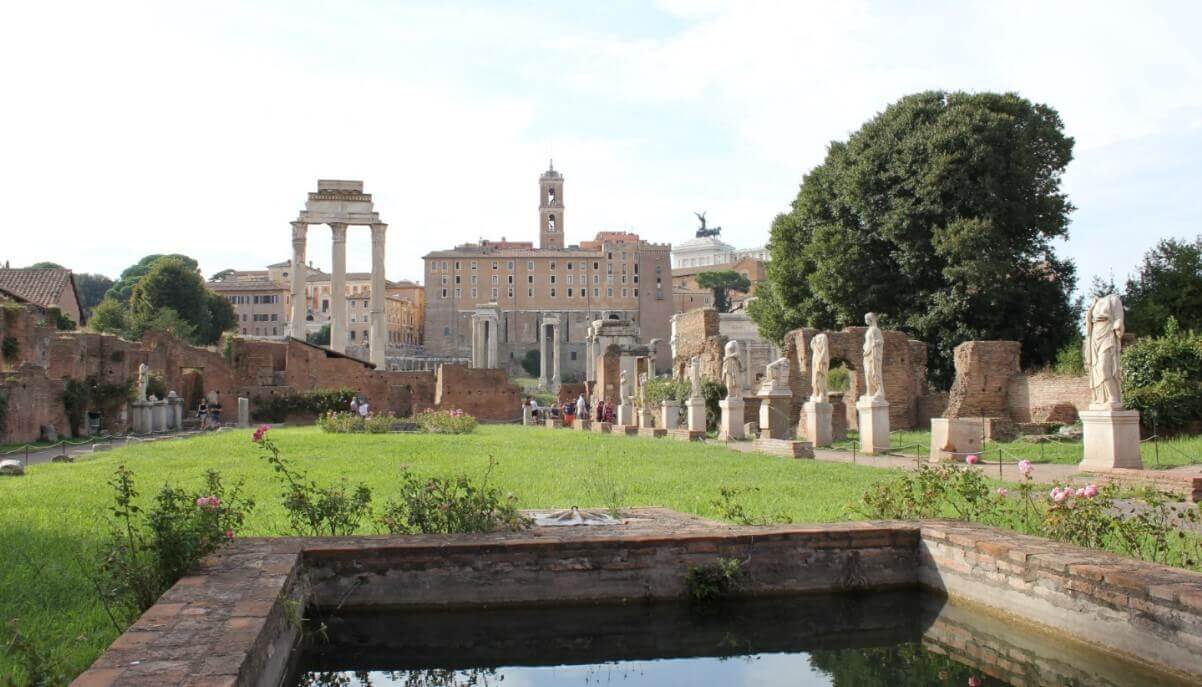
Curious about the Temple of Vesta in Rome and its fascinating story? This guide covers everything you need to know about how to visit the Temple of Vesta in Rome, including where to find it, how to get there, and the best way to explore this ancient sanctuary inside the Roman Forum.
One of the most sacred sites of ancient Rome, the Temple of Vesta was dedicated to the goddess of the hearth and home. Learn about its unique circular design, the eternal flame that once burned inside, and the important role it played in Roman religion.
Start your visit and uncover the timeless charm of the Temple of Vesta!
How to Visit the Temple of Vesta in Rome

The Temple of Vesta in Rome is located inside the Roman Forum, and you can visit it with any ticket that grants access to the Forum and Palatine Hill.
Since it sits right along the main archaeological route, you’ll naturally pass by it during your visit, no separate ticket is needed.
Here are the best ways to explore it:
- Roman Forum + Colosseum skip-the-line ticket: Book your entry online (see here) to avoid waiting at the gates and enjoy direct access to the archaeological area. Once inside, follow the path toward the House of the Vestal Virgins, the Temple of Vesta is right beside it.
- Guided Colosseum Tour & Roman Forum : If you want to truly understand the temple’s religious importance and the role of the Vestal Virgins, a guided tour is ideal (check this one). Your guide will point out details that most visitors miss, such as the remains of the sacred hearth where the eternal flame once burned.
- Roma Pass: If you’re planning to visit several major landmarks like the Colosseum, Roman Forum, Vatican Museums, and more, an all-in-one pass like the Roma Pass, Omnia Card or Rome Turbopass can make your trip easier and more cost-effective. These sightseeing passes include Forum access and let you see multiple attractions with a single booking.
👉 Check all current Forum & Colosseum tickets and tours here and choose the option that fits your itinerary best.
Temple of Vesta Location & How to Get There

The Temple of Vesta in Rome sits at the very heart of the Roman Forum, right next to the House of the Vestal Virgins. It’s one of the most sacred spots of ancient Rome, and because of its central position, you’ll almost inevitably walk past it while exploring the Forum’s main path.
You’ll find the Temple of Vesta just a short stroll from iconic sites like the Temple of Castor and Pollux, the Regia, and the Arch of Titus, which makes it incredibly easy to include during your visit to the Forum and Palatine Hill. Its small circular structure is unmistakable once you’re inside the archaeological area.
How to get to the Temple of Vesta :
- By metro: Take Metro Line B (blue line) and get off at Colosseo station. Enter the Roman Forum from the Via dei Fori Imperiali entrance. From there, follow the main path toward the center of the site, the Temple of Vesta is about a 10-minute walk inside the Forum.
- By bus: Buses 51, 75, 85, 87, and 118 all stop along Via dei Fori Imperiali or near Piazza Venezia. From these stops, simply follow the signs toward the Roman Forum entrance. Once inside, the Temple of Vesta is located directly along the main visitor route.
- On foot: If you’re coming from the Colosseum, Palatine Hill, or Piazza Venezia, reaching the Temple of Vesta will take under 10 minutes. It’s one of the most accessible monuments in the entire Forum.
You can check the exact location of the Temple of Vesta and get the fastest walking directions on Google Maps below.
Temple of Vesta Opening Hours
The Temple of Vesta in Rome is located inside the Roman Forum, and you can visit it during the Forum’s standard opening hours.
Because the temple is an outdoor structure and not accessible inside, it is always visible to visitors walking through the archaeological area, though certain pathways around it may occasionally be closed for preservation work near the House of the Vestal Virgins.
The Roman Forum generally opens at 8:30 am, with closing times depending on the season: around 4:30 pm in winter and up to 7:15 pm in summer. Keep in mind that the last entry is usually one hour before closing.
Closed on: December 25 and January 1.
 Visiting tip: To enjoy the Temple of Vesta at its most atmospheric, plan your visit for early morning. The soft sunlight hits the circular ruins beautifully, and the Forum is far quieter, allowing you to appreciate the sacred heart of ancient Rome without the crowds.
Amazing Temple of Vesta Architecture Overview

In 1877 the temple was discovered and excavated. Check out some of what was discovered below:
Temple of Vesta Dimensions in-detail
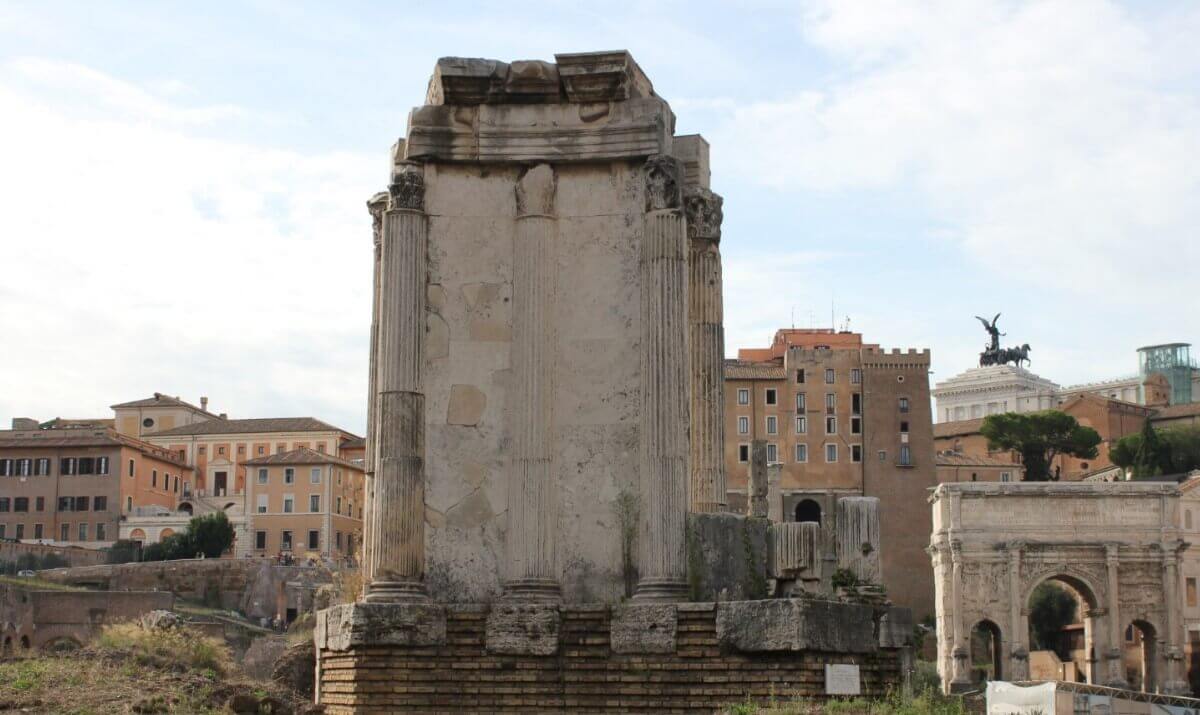
The Vesta Temple is about 14.8 metres in diameter and is formed of 20 columns. These massive columns reach over 10 metres high.
Floor Plan Vesta Temple
You can get a good idea of what inside the Temple of Vesta looked like from the floor plan. Luckily, there was plenty of evidence.
Reliefs built into marble structures, as well as imprints on coins help us understand. On the floor plans, you can see the east facing door, and the columns surrounding the circular interior. Here, you can also see the steps leading up to the entrance.
Looking Inside of Temple of Vesta
Inside the Vesta Temple, you would have seen the fire burning in the centre. The ashes from the fire were removed and kept, then disposed of in the Tiber once a year.
Also from the inside you would have been able to look up and see the hole in the roof. This was of course to let the smoke from the fire out. But, unfortunately, this actually acted as a sort of vent, and often caused dangerous fires.
Tivoli Temple of Vesta reconstruction details

Over the course of its lifetime, the Temple of Vesta has been restored and reconstructed. The largest of these reworks in ancient times was in 191AD, following yet another fire. Then, the Temple remained untouched until the middle of the 16th century, when it was dismantled. It’s beautiful marble pieces were taken to build other structures.
From 1877, archeologists excavated the site. In 1900 Giaccomo Boni led and published a study into the excavations. The details given – including floor plans and dimensions – were used to reconstruct some of the temple in 1931. You can visit these reconstructed parts today.
Temple of Vesta Facts
Here are 3 fun facts about this glorious temple.
The fire wasn’t the only thing in there
The temple was also home to an effigy of Roman Goddess Minerva (Greek goddess Athena). Originally thought to have come from Troy, the Romans linked Minerva to Athena. Not really sure why it was kept in Vesta’s temple. Not sure if she would have liked that..
The Vestas Virgins
The Temple of Vesta, Roman Forum, was looked after by the Vestal Virgins. They were like some sort of posh glamour squad in my head until I read up about them. Turns out they actually entered service as children, sometimes as young as 6! I wouldn’t leave my 6 year old in charge of the remote control, never mind a fire!
The House of the Vestal Virgins

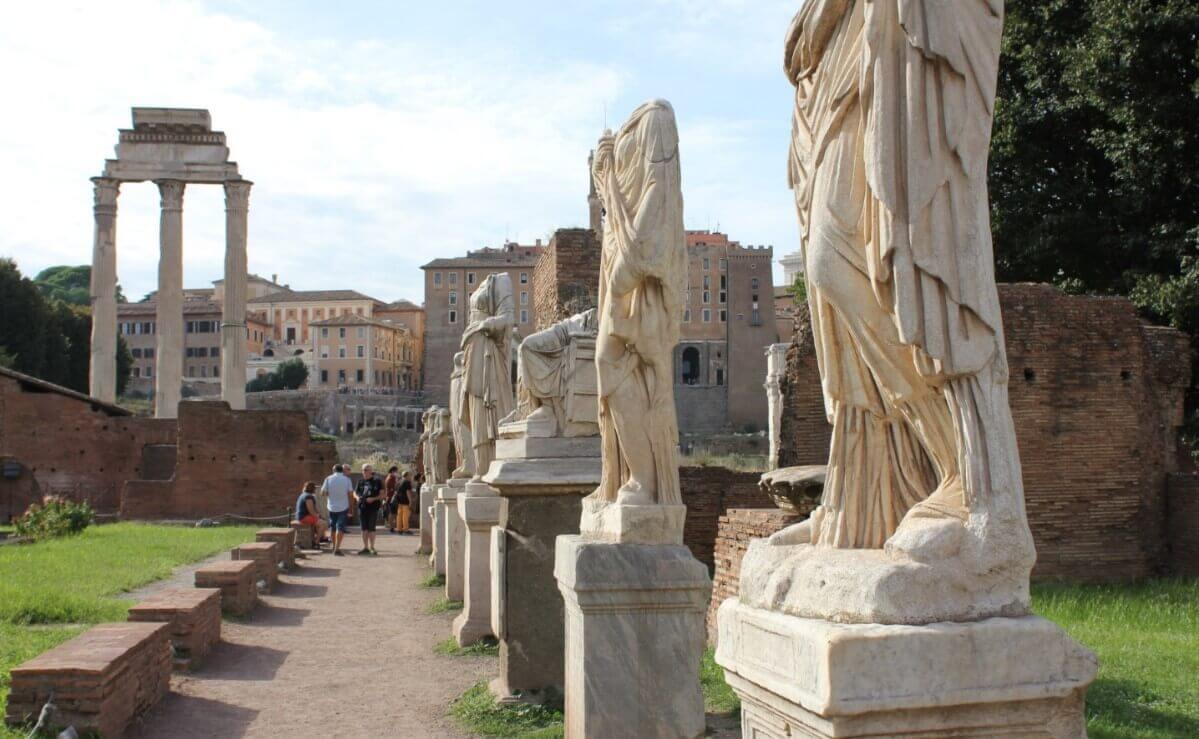
It wasn’t all about fanning the fire. The Vestal Virgins got to spend their down time in the adjacent mansion. Beautiful ornaments, pools and statues adorned this space. However, they were probably too worried about getting buried alive if the fire went out to enjoy it.
The Vestal Virgins
Tending to the fire were 6 “priestesses” – the Vestal Virgins. These women, as you can guess, took a vow of celibacy during the 30 years they served the temple. One of the main jobs was to keep the fire alight – failure to do so was faced with harsh punishment.
In addition, any rumour of breaking the celibacy vows could result in death. The Romans believed if disasters happened to Rome, it was because of some misbehaviour by the priestesses. However, even though the risk of death was high, many remained in the priesthood due to the social benefits it afforded.
More about Temple of Vesta History
It is believed that the first structure honoring Vesta dated back to the 3rd century BCE. Apparently, it was modelled on a simple hut – circular in shape. This is said to mimic the original place the goddess Vesta was worshipped – the home.
The fire that was kept burning inside the original temple proved troublesome – the original construction materials were wood and straw. It was therefore rebuilt in the 3rd century AD with more durable materials.
Top Attractions near Temple of Vesta in Rome

Hidden in the center of the Roman Forum, the Temple of Vesta sits among some of ancient Rome’s most famous landmarks.
After you’ve admired this small but important circular temple, you’ll be just steps away from several amazing sites that make history feel alive.
- Colosseum: Just a short walk away, the Colosseum needs no introduction. This colossal amphitheater once echoed with roaring crowds and gladiator clashes. Whether you’re into history or jaw-dropping snapshots, it’s absolutely worth the stroll. Book your tickets here >>
- House of the Vestal Virgins: Just steps from the Temple of Vesta, this elegant courtyard and residence once housed the priestesses who safeguarded Rome’s sacred flame. Wander among statues and ruins that hint at their mysterious and privileged world.
- Roman Forum: You’re already in it, but take time to explore deeper. Crumbling temples, triumphal arches, and ancient streets reveal what was once the bustling political, religious, and commercial center of the Roman Empire. To explore the Forum efficiently, opt for a multi-site ticket that also grants access to places such as the Colosseum and Palatine Hill. Check availability for your dates here >>
- Palatine Hill: A short climb away, Palatine Hill offers sweeping views and legendary stories. This is where emperors built their lavish palaces, and where Rome’s earliest myths place the city’s founding. It’s equal parts archaeology and awe.
- Temple of Saturn: Standing tall with imposing columns, the Temple of Saturn marks one of Rome’s oldest religious sites. Check out the remains and imagine it as the ancient treasury, once filled with spoils and offerings.
- Arch of Titus: Stroll through this triumphal arch that commemorates Emperor Titus’ victory in Judea. Its detailed reliefs depict dramatic scenes and give you a snapshot of Roman propaganda and power carved into stone.
- The Regia: Once the office of Rome’s early kings and later the pontifex maximus, the Regia may look simple today, but it played a crucial role in religious and political life. A perfect stop for history buffs craving deeper context.
With so many famous sites around the Temple of Vesta, exploring ancient Rome becomes easy and enjoyable, one impressive landmark at a time.
FAQs

Where is the Temple of Vesta located?
You can visit this stunning location as part of a trip to the Roman Forum. Find it near the Regia.
What was the Temple of Vesta used for?
The structure was used to house and protect the fire of the goddess Vesta. She symbolised Rome’s strength and prosperity.
When was the Temple of Vesta built?
A temple is first thought to have been constructed on the site as early as the 3rd century BCE. Over the years, fire destroyed it many times. Subsequently it had to be rebuilt on many occasions. Finally, in the third century AD it was rebuilt and stood tall until the 16th Century.
Who built the Temple of Vesta?
The wife of Septimius Severus is credited with having led the build of the new temple in the 3rd century AD.
How old is the Temple of Vesta?
A temple Has stood on the same spot since the 3rd century BCE.
How tall is the Temple of Vesta?
With columns standing at over 10 metres high, this was an imposing sight back in the day.
What is the Temple of Vesta?
A structure, build to honour the goddess Vesta and to house her holy fire.
What material was used in the Temple of Vesta?
The original structure was probably straw and other earthen materials. Later constructions added the glorious marble pillars. A reconstruction of part of these pillars can be seen today in the Roman Forum.
Conclusion
You’re now a top pro on the history of the Vesta Temple. Get on to our other pages right away to plan your trip to the Roman Forum and the Colosseum before you forget what you’ve learned!
Rome city passes are also worth considering, as they combine major attractions into a single ticket and can save you both time and money. Take a look at all the available Rome city cards here to find the one that best fits your trip.

Fanny, an ardent admirer of ancient history and architecture, has been fascinated by the Colosseum since her first visit to Rome in 2012. As a key contributor to the Visit Colosseum Rome blog, she brings her passion for the Roman Empire’s monumental legacy to every article and guide.
Hello! I am trying to find out more information about the construction of the Tivoli temple, and although you include a section called “Tivoli Temple of Vesta reconstruction details” the photos seem to be of the temple in Rome.
Could you please confirm or not that the text refers to the temple in Rome, or is it really the temple in Tivoli?
I left a message for the Tivoli tourism office, but they have not replied and I really need this information. If you can suggest who to contact I would really appreciate your help.
Thanks in advance!